 放大圖片 放大圖片
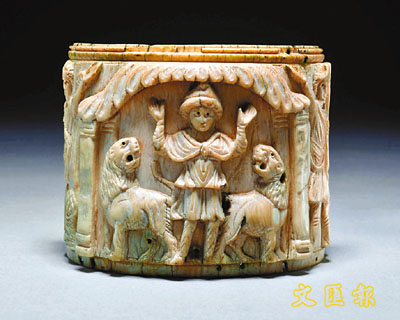
但以理聖餐盒 Ivory pyxis with Daniel
5世紀 5th Century
埃及 Egypt
象牙 Elephant ivory
聖餐盒上雕希伯來先知但以理站在兩頭獅子之間,旁邊有天使抓著先知哈巴谷的頭髮,要帶他去巴比倫送一鍋熬蔬菜給但以理;另一邊是手持權杖的人和天使,還有一隻亞伯拉罕用來代替他的兒子以作為祭物的公羊。
聖餐盒是一種象牙盒,飾以神話傳說與田園風光,或基督教場景。它們的功能多樣。
Pyxis is a modern term(from the Greek for a "box") for a circular container cut from a section of an elephant tusk.
Underneath a baldachin stands the figure of Daniel flanked by two lions. To his left an angel holds the prophet Habakkuk by the hair to take him to Babylon with a basket of pottage for Daniel. To his right is a helmeted figure holding a staff and an angel and a ram tied to a tree. This is the ram sacrificed by Abraham in Isaac's place.
A pyx was an ivory box decorated with either mythological and pastoral scenes, or with Christian scenes. ■資料:香港藝術館
|


 放大圖片
放大圖片


