 放大圖片 放大圖片
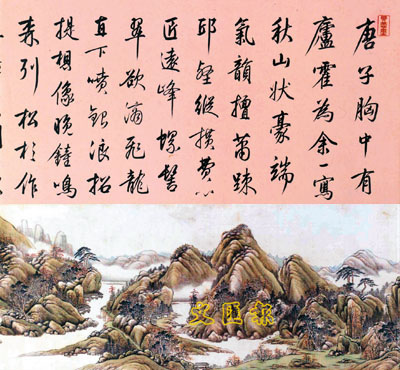
秋山不老圖卷/1733 Autumn mountains/1733
唐岱(Tang Dai,1673 – after 1751)
水墨設色絹本手卷 (Handscroll, ink and colour on silk)
唐岱,字毓東,滿洲人。官至內務府總管,以繪畫侍奉內庭。清康熙皇帝曾賜封他「畫狀元」稱號,乾隆皇帝題其畫甚多。為清代「正統畫派」畫家王原祁 的門下弟子,工畫山水,風格沉厚穩重,承接了宋代山水畫的特色。繪山川甚有氣勢,造型富變化,雄渾峭拔,超然曠逸。山石以乾筆皴擦而成,富有層次感及立體感。為典型清代院體畫風格。
Tang Dai was a Manchu painter serving in the imperial court. He was conferred the title of huazhuangyuan (Number One Painting Scholar) by Emperor Kangxi . His landscape was influenced by his teacher Wang Yuanqi of the Orthodox Painting School as well as the Song style. The myriad mountains in his paintings were depicted with parched brushstrokes that evoked monumental grandeur. His style was typical the court painting style of the Qing dynasty. 資料:香港藝術館
|


 放大圖片
放大圖片


