 放大圖片 放大圖片
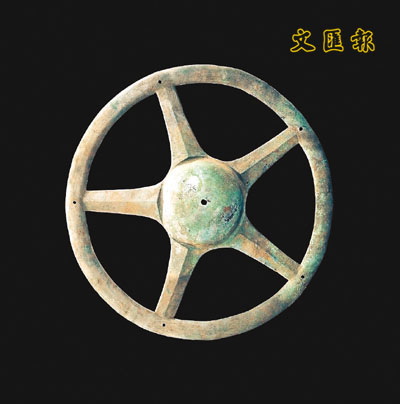
銅太陽形器 (Bronze sun disc, c. 1200 BC)
三星堆博物館藏 (Collection of Sanxingdui Museum)
器物出土時全被砸碎並經火焚燒過,原來應有六件,只有兩件經修復復原。這件類似車輪的圓形器物的用途,令人費解。學者有多種看法,有認為是車輪、盾牌上的盾飾等。器物的圖像特點與四川珙縣懸棺墓岩畫和中國南方地區出土銅鼓上的太陽紋飾相似,普遍認為是太陽形器。器身上的小孔可能用來將器物固定在某種物體上,供人膜拜,顯示太陽崇拜是古蜀國的宗教文化。
This implement was found smashed and burnt when unearthed. Only two of the original six sun discs have been restored. The function of this wheel-like disc is still elusive. It could have been a wheel or an ornament on a shield, but the most current view is that it stands for the sun, as its features are similar to the petroglyph of the hanging coffins in Gong county in Sichuan, and the sun-patterned carvings on the bronze drums unearthed in southern China. It shows that sun worship was part of the religious culture of the ancient Shu State.
■資料:香港文化博物館
|


 放大圖片
放大圖片


