 放大圖片 放大圖片
三星堆博物館藏 (Collection of Sanxingdui Museum)
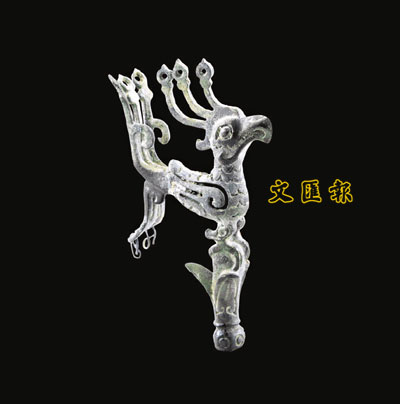
原為銅樹的殘枝。鳥尾上翹,頭上聳立三支冠羽,尾羽向上下展開如孔雀開屏,站在花蕾上。三星堆二號坑共出土8株青銅樹,其中一株大型銅樹復原後,發現樹身上下共分3節,每節有3個分枝,每枝上立一鳥。學者普遍認為三星堆銅樹與中國神話傳說中的「扶桑」、「建木」和「若木」有密切關係。根據記載,「扶桑」樹上有十個太陽,「九日居下枝,一日居上枝」,而上古先民認為太陽每天東升西降,是以鳥為載體,因此鳥的形象亦是太陽的象徵。這隻銅樹上的立鳥,可能就是其中一個太陽的象徵。
It is a broken branch from the mythical tree. Perched on a bud, the bird has its tail curved upwards. Peacock-like plumes in sets of three adorn the crest and the tail. One current view among scholars is that the bronze trees of Sanxingdui are closely linked to the “Fusang”, “Jianmu” and “Ruomu” trees in Chinese mythology. Ancient people thought that the birds carried the suns in their movement from east to west. Hence the image of the bird was the image of the sun. This bronze bird was likely to have been a symbol of the sun. ■資料:香港文化博物館
|


 放大圖片
放大圖片


