 放大圖片 放大圖片
Fighting fires with a pop and splash
William Cleary, a Boeing engineer, believes aerial firefighting could become child's play. Five years ago, his son drenched him with a water balloon — and got him to thinking. So he started working on a system to use giant water balloons to put out wildfires.
After the inspiration from his son, Cleary started tossing water balloons off a parking garage to study their fall. But his project really took off when a paper he wrote about his concept won a Boeing innovation contest and $100,000 in research and development funding that went with it.
The basic concept is simple: Biodegradable plastic balloons 1.2 meters in diameter hold 908 liters of water; they are enclosed in cardboard boxes that are torn open by the wind when pushed out the back of a cargo plane; the balloons burst in midair, making it rain in the desert.
With the use of GPS coordinates and wind-speed calculations, the balloons could be dropped with precision from a safe altitude high above the flames, the developers say.
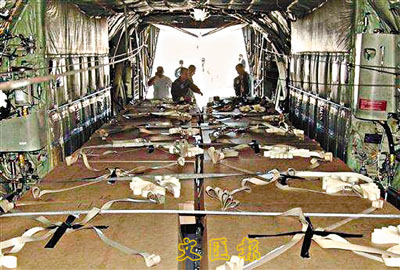
The water balloons could make any plane with a ramp, a cargo bay, and a specialized GPS system into a firefighter. A C-130 cargo plane, which the Air National Guard uses to drop supplies, could fit 16 water balloons, or more than 14,384 liters of water or fire retardant per trip.
An ordinary firefighting helicopter can hold more than 7,570 liters of water or fire retardant, while the Forest Service's air tankers can hold 10,220 liters of liquid in a tank permanently installed on each aircraft. Most important, said Cleary, the planes would drop the water bombs accurately from high above the flames instead of precariously skimming the smoldering hills, the way air tankers do now.
■AP
波音公司工程師威廉.克利里相信滅火工作亦可當兒戲。5年前,其子擲水彈令他濕透,他因此有所啟發,開始研究如何用巨型水彈撲滅野外山火。
獲啟發後,克利里開始在停車場擲水彈,測試下降的狀況,但真正讓他全速啟動計劃的,是他寫的一份概念文章,該文贏得波音創意比賽的獎項,奪得10萬美元(約78萬港元)研發基金。
裝置的基本概念很簡單:直徑1.2米的生物分解塑膠氣球可盛載908公升水,水彈會放入硬卡紙盒,在貨機上投下時,氣流會將紙盒扯開,水彈會在半空爆裂,水如雨般落到亟待救援的地方。
研發人員表示,經全球定位系統定位及計算風速後,貨機在火場上的安全高空亦可準確投下水彈。
任何飛機只要配備活動舷梯、貨倉及特製的全球定位系統,都可以成為滅火成員。美國空軍國民警衛隊用來投擲物資的C-130運輸機每次可載16個巨型水彈,即約1.44萬公升水或滅火劑。
普通的滅火直升機可載7,570公升水或滅火劑,而美國林務局的滅火飛機則可於機上常設的儲存缸內裝約1萬公升的液體。克利里稱,最重要的是,盛載水彈的飛機可在高空準確「投彈」,而不用如滅火機般危險地在火光紅紅的山上低飛掠過。
■美聯社
註 解
(1)Global Positioning System(GPS):全球定位系統,1970年代由美國陸海空三軍聯合研製,由24顆人造衛星組成,地球上任何一點都可以同時觀測到4顆衛星,量度出經緯度、高度、速度、方向及時間。經20多年的研究實驗,耗資300億美元,到1994年3月,全球覆蓋率高達98%,民用GPS信號的精確度可達20米。
(2)C-130 cargo plane:C-130「大力士」運輸機,1956年服役以來,已生產了40多個型號,超過2,200架,超過50個國家採用,是美國最成功、最長壽和產量最多的現役運輸機,在美國戰術空運力量中佔有核心的地位。早前荷里活電影《蝙蝠俠黑夜之神》的製作單位,便曾以C-130大力士運輸機充當蝙蝠機在維港低飛取景。
羅國偉 資深翻譯員
|


 放大圖片
放大圖片


