 放大圖片 放大圖片
約1200年
法國 里摩日城
Limoges, France
鍍銅合金琺瑯
Gilt copper-alloy and enamel
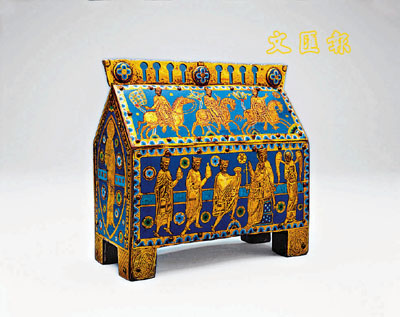
極多的基督徒走訪德國科隆大教堂,是為了朝拜裝飾有三王朝拜聖嬰圖的聖物箱,因此使科隆成為歐洲四大朝聖地之一。以法國中部燒製瓷器聞名的城市里摩日城所製的聖物箱,盛載來自聖地的聖物作為禮品的做法,蔚為風潮,使朝拜聖物箱的風氣更為熾烈。箱子的正面繪有東方三王在旅途中和朝拜聖嬰的情景。箱子兩側各繪有身份不明的聖徒像,背面裝飾了植物花卉方形圖案。
The cult of the three kings at Cologne prospered as one of the four most important centres of pilgrimage in Europe. Gifts of relics from the shrine, contained in high quality reliquaries produced in Limoges, encouraged the cult to spread.
The narrative of the journey and the adoration of the three kings can be seen on the front. Each side carries the image of an unidentified saint while the back is decorated with squares containing floral motifs. ■大英博物館館藏
|


 放大圖片
放大圖片


