 放大圖片 放大圖片
Lina Chu
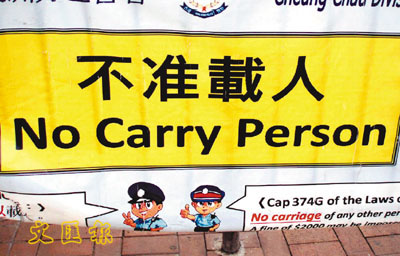
一天到離島旅行,發現了這個告示橫幅:
下面更註明 No carriage of any other person...A fine of $2000 may be imposed。(不要接載他人……會被罰款二千元。)
這告示 ‘No Carry Person’ 的用意是勸諭騎單車的人不要接載他人。雖然意義一看就明白,但是文法有點問題。
勸諭應採「否定式命令」
這是發出警告(warning)的句子,這類句子屬於imperative mood(命令語氣)。勸諭人不可做某些事,應採用否定式命令句(negative imperatives) 。上面的句子,可以寫成:
Don't carry any other persons (passengers).
否定式命令句以Don't或Do not開句,並附以基本形態動詞(base form of verb)。Imperative mood的句子,雖然略去了主語(Subject),例如「你(You)」,但仍是一個完整的句子(sentence)。
我們在日常生活中,常會在告示碰到類似的句子。只要稍加留意,不難發現。
在泳灘,我們可以看到:
Do not enter water when the shark warning flag and the red flag are hoisted.
鯊魚旗及紅旗同時懸掛時,切勿下水。
在升降機內,我們可以看到:
When there is a fire, don't use the lift.
發生火警時,不要使用升降機。
乘搭巴士時,我們可以看到:
Do not stand on the upper deck or staircase.
上層及梯級不准站立
乘搭港鐵時,我們可以看到:
Please don't eat, drink or smoke on the train.
請勿在車廂內飲食或吸煙。
短詞告示 可以No開首
然而,不是全部標語或告示都採用這種命令語氣的句子(imperative sentences),很多時會採用短語,而非完整的句子。這類標語以No開首,附以-ing形式的動詞。例如:
No smoking
不准吸煙
No littering
不得隨地丟棄垃圾
近日觀看一個談論猴子繁衍問題的電視節目,看到郊野公園入口處有一個告示牌,寫著:
No feeding of wild animals
不准餵飼野生動物
如果文首的No carry person例子要採用這種方式,就可以寫成:
No carrying of any other persons.
那樣也沒有問題。 linachu@hkbu.edu.hk
|


 放大圖片
放大圖片



