 放大圖片 放大圖片
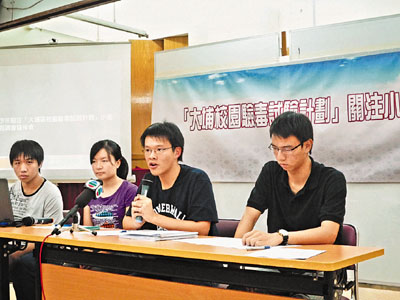
■調查負責人吳希彤(右二)表示,受訪青少年對驗毒計劃意見不一。資料圖片
大埔區校園驗毒計劃將於今年12月落實,但有關注計劃的青少年團體早前已率先向區內學生進行大型調查,結果發現學生對有關計劃「意見分歧」,分別有約4成及3成學生贊成及反對計劃。此外,不少學生對計劃的取態及會否簽署同意書出現自相矛盾情況,如近2成學生聲稱贊成驗毒,卻拒簽同意書;6%同學反對計劃,卻又願意簽同意書。
青少年「關注大埔區校園驗毒試驗計劃」小組在9月中以問卷形式,成功訪問大埔區22間中學共978名中一至中七學生,了解其對大埔區校園驗毒計劃的意見。
調查結果顯示,49%的人認為驗毒試驗計劃不能對青少年吸毒產生阻嚇作用,即使贊成推行計劃的學生,亦有33%的人對計劃的阻嚇效果存疑。學生普遍認為,打擊毒品源頭、加重吸毒者刑罰及對學生加強宣傳和教育,才是減緩青少年吸毒問題的關鍵。
機構又發現,部分受訪者雖然贊成計劃,但又未必願意簽同意書,反之亦然。如近2成學生聲稱贊成驗毒,卻拒簽同意書;6%同學反對計劃,卻又願意簽同意書。另有4%學生對計劃「無意見」,但亦願意簽同意書。該小組主席暨調查負責人吳希彤表示,部分學生出現自相矛盾的情況,或與外在因素有關,如群眾壓力及標籤效應。他又指,統計數字反映青少年對驗毒試驗存在意見分歧,當中不少人或因對計劃了解不足而仍未取態。
Students have no fixed stance on school drug testing scheme
Months prior to the on-campus drug testing scheme in Taipo which is due to take place this December, a youth concern group has conducted a large-scale survey to gauge the opinions of the students in the district. Findings showed that students had "no consensus" on the school drug testing scheme, with about 40% of the respondents agreeing and 30% objecting to the scheme. In addition, a considerable number of students gave self-contradictory responses regarding their attitude to the scheme and their willingness to sign the letter of consent. Nearly 20% of the students claimed that they agreed to the scheme but would refuse to give consent to the drug test. On the other hand, 6% of the students objected to the scheme but would be willing to sign the letter of consent.
The Youth Concern Group on Drug Testing Scheme in Taipo conducted a questionnaire survey on the school drug test scheme in mid-September. They successfully elicited responses from 978 Form One to Form Seven students from 22 schools in the district.
Results of the survey revealed that 49% of the respondents did not think that the scheme would be able to deter youths from taking drugs. Even among those who supported the scheme, 33% were found to be skeptical of its deterrent effects. Students generally believed that to alleviate the problem of drug abuse among young people, the keys were to wipe out the sources of supply, to impose heavier punishment on drug addicts, and to reinforce publicity and education for students.
The concern group also discovered that some of the respondents were not willing to sign the letter of consent though they supported the drug test scheme, and vice versa. Nearly 20% of the students claimed that they agreed to the scheme but would refuse to sign the letter of consent while 6% opposed the scheme and yet were willing to give consent to the drug test. In addition, 4% of the students who held no opinion on the issue were willing to sign the consent letter. Ng Hi-tung, chairman of the concern group and the person-in-charge of the survey, attributed the occurrence of these self-contradictory responses to external factors such as public pressure and the labeling effect. He said the statistics revealed a difference in opinions among the young people and that many of them might have refrained from taking a stance simply because they did not fully understand the drug test scheme. ■translation by 開明
|


 放大圖片
放大圖片



