 放大圖片 放大圖片
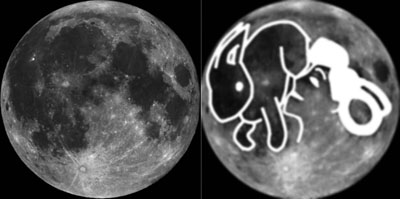
神話與傳說是中國古代人生活的重要元素,每當仰望明月之際,人們不難從月亮的明暗特徵幻想到廣寒宮的嫦娥和玉兔。其實月面上光暗有別的特徵,就是月球不同地貌的明顯分野,從伽利略把望遠鏡指向天空開始,月面較為黑暗的區域稱為「月海」。30幾億年前,大量熔岩從月球地殼較薄處溢出,覆蓋低窪地區,形成月海。月海佔月球表面總面積的16%,而且絕大部分集中在面向地球的一面。月海岩石反光率較低,故看起來顯得黑暗。
至於月球表面明亮的地形,一般稱為「月陸」,月陸是高出平均月平面的地區,滿布39億年前隕石撞擊所造成的大小環形山。此外,月面還有一些面積較月海或月陸小、但非常光亮的斑點和條紋地貌,這種地貌叫做「輻射線系統」。
Maria and Terra
To the people of ancient times, legends and tales are just as real as their daily lives. So when they looked up at the moon, nothing could stop their imagination. The images of Chang'e and the jade rabbit are good examples. Just let your imagination run wild and see what you can see in the dark patches of the moon's face. In reality, the dark patches are "maria"(lunar seas, singular: mare). 3 billion years ago large amount of lava oozed from under the thinnest parts of the lunar crust and filled the low-lying basins to become maria. Maria make up 16% of the lunar surface. Lunar seas look dark because the mare material reflects less sunlight.
The bright regions on the moon are known as "terra" or highlands. These are heavily cratered regions. They tell us about the chaotic situation of the young solar system more than 3.9 billion years ago. ■甄枝強 資深天文愛好者
|


 放大圖片
放大圖片



