 放大圖片 放大圖片
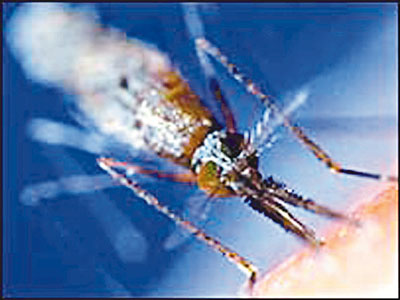
■研究專家表示,阻礙蚊子交配,能夠遏止瘧疾傳播。資料圖片
英國科學家表示,人為干預蚊子的交配可遏止瘧疾傳播。
研究目標是在非洲瘧疾傳播的主要瘧原蟲生物寄主─岡比亞瘧蚊,由於這種瘧蚊一生只交配一次,因此干預其交配過程可大減瘧蚊的數量。
英國帝國學院研究人員發現雄蚊身上有一個「交配栓」,能確保雄蚊將精子置放於雌性同類體內的適當位置,以提升交配成功率。若無這種「交配栓」,雄性瘧蚊的精子無法恰當地存於雌性體內,受精過程受阻。
帝國學院生命科學系的卡泰魯恰寫道:「『交配栓』對傳宗接代十分重要。」
瘧疾是由蚊叮傳播的致命疾病,全球每年有逾百萬人感染死亡,在重災區如非洲撒哈拉以南地區和部分亞洲地區,逾9成死亡人數是小童。
卡泰魯恰的團隊分析雄蚊「交配栓」的成分,發現它是由谷氨㩦胺轉氨㩗與雄蚊精液中的蛋白質,相互作用形成,並令液體凝固成一種膠狀物質,那就是「交配栓」。
當研究員在實驗室拿走雄蚊的谷氨㩦胺轉氨㩗後,雄蚊不能製造「交配栓」,交配時便不能生育。卡泰魯恰表示:「若這個過程能在現實應用,造出如殺蟲水的噴劑,便可令野生的雌蚊絕育,是對付瘧疾的一項武器。」
醫療專家希望能以多角度對抗瘧疾,包括殺蟲水,讓高危地區有更多最佳藥物。世衛表示,在抗瘧的戰爭中,增加撥款已開始收效。 ■路透社 羅國偉 資深翻譯員
Meddling in Mosquitoes' Sex Lives Cuts Malaria
Interfering in mosquitoes' sex lives could help to halt the spread of malaria, British scientists said.
A study on the species of mosquito mainly responsible for malaria transmission in Africa, Anopheles gambiae, showed that because these mosquitoes mate only once in their lives, meddling with that process could dramatically cut their numbers.
Researchers from Imperial College London found that a "mating plug" used by male mosquitoes to ensure their sperm stays in the right place in the female is essential for her to be able to fertilise eggs during her lifetime. Without the mating plug, sperm is not stored properly and fertilisation is disrupted.
"The plug is vital for successful reproduction," Flaminia Catteruccia of Imperial's life sciences department wrote.
Around 40 percent of the world's population is at risk of malaria, a potentially deadly disease which is transmitted via mosquito bites. It kills over a million people worldwide every year and children account for about 90 percent of the deaths in the worst affected areas of sub-Saharan Africa and parts of Asia.
Catteruccia's team analysed the composition of the male mosquito's mating plug and found it is formed when an enzyme called transglutaminase interacts with proteins in the male mosquito's seminal fluid. This interaction causes the fluid to clot into a gelatinous solid mass, known as the mating plug.
When the researchers knocked out the enzyme in male mosquitoes in lab, the plug could not form, meaning reproduction failed when they mated. If this process could be developed for use in the field, perhaps in a spray form like an insecticide, it could "effectively induce sterility in female mosquitoes in the wild," Catteruccia wrote, offering potential as "one more weapon in the arsenal against malaria".
Health experts want more effort to go in to a multi-pronged approach to fighting malaria, combining prevention measures like insecticides with improved access to the best drug treatments in highest risk areas. The WHO said that increased funding was starting to pay off in the battle against the disease. ■Reuters
|


 放大圖片
放大圖片



