 放大圖片 放大圖片
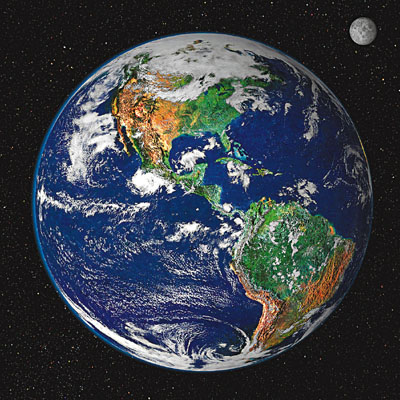
■有外國研究指,載有冰塊的小行星可能在數十萬億年前撞擊地球時,將水源帶到我們的世界。 資料圖片
兩項早前公布的研究報告顯示,天文學家首次偵測到小行星上存在冰塊和有機化合物。以往的理論指出,彗星和小行星近40萬億年前撞擊地球,將水和碳分子兩樣生命之源帶到地球;今次的發現為這理論帶來理據。
兩隊科學家分開研究,利用美國太空總署(NASA)在夏威夷的紅外線天文望遠鏡,發現在火星和木星之間圍繞太陽公轉的司理星,表面覆蓋一層很薄的霜。
然而這次發現仍有謎團。為何小行星表面的熱力可蒸發冰塊,但水在過去數以十億年來都在表面凝結呢?研究員解釋,只有小行星內的冰塊不斷有水氣溢出,才能補償表面的霜。換言之,直徑125英里的司理星內包含的水礦合物很可能較任何人想像的還要多。
模糊小行星彗星界線
這次發現亦進一步模糊小行星和彗星之間的界線。小行星一直被認為是岩石,由於接近太陽,故難以有水;彗星包含類似的東西,但有冰和塵土。彗星在軌道移近太陽時,冰會融化,會出現一條如標記的「尾巴」。
其中一隊的領導研究員、來自約翰霍金斯大學的里金夫表示:「我們以往認為只有彗星才能為地球帶來大量水源,但現在我們有更多理據相信,小行星撞擊地球或可為地球帶來大量水源,特別是如果每一顆小行星都含有20%至30%水源。」
里金夫的團隊在2002至2008年中7次觀察司理星,研究其太陽反射光的波長,決定其表面的物質成分。里金夫表示,雖然小行星有孕育生命的水和碳分子,但仍有其他因素令小行星沒有生命出現。他說:「小行星沒有液態水和大氣層,而且太陽的紫外光非常高,這些因素都阻礙生命的形成。」 ■綜合外電消息
■羅國偉 資深翻譯員
Ice Asteroids Likely Source of Earth's Water
Astronomers have for the first time detected ice and organic compounds on an asteroid, a pair of landmark studies says.
The discovery bolsters the theory that comets and asteroids crashing into Earth nearly 4 billion years ago seeded the planet with water and carbon-based molecules, both essential ingredients for life.
Working separately, two teams of scientists using NASA's Infrared Telescope Facility in Hawaii found that the 24 Themis, which orbits the Sun between Mars and Jupiter, is literally covered in a thin coating of frost.
Still, a mystery remained: How could frozen water persist over billions of years on an asteroid hot enough to vapourise surface ice? Only if that layer of frost were continually replenished by the slow release of water vapour released from ice in the asteroid's interior, the researchers reasoned. In other words, 24 Themis-some 125 miles in diameter-almost certainly contains far more water locked in its minerals than anyone suspected.
The findings also blur the distinction between rocky asteroids, once thought to be too close to the Sun to contain water, and comets, composed of much the same stuff along with ice and dust.
Comets form their signature tails when ice melts during the phase of orbit that brings them closest to the Sun.
"We had previously thought that only the comets could have brought a lot of water to Earth," said Andrew Rivkin, lead author of one of the studies and researcher at John Hopkins University.
"But we now have more reason to think that the asteroid impacts may also have brought a significant amount, especially if each one might have 20 to 30 percent water," he said.
Rivkin's team observed 24 Themis on seven dates from 2002 to 2008, analysing various wavelengths of reflected sunlight to determine the composition of the surface. While life-giving water and carbon molecules are present on the asteroid, other factors will have discouraged new life forms emerging, Rivkin said.
"The lack of liquid water and an atmosphere, and the presence of very strong ultraviolet light from the Sun are all factors we think work against the formation of life," he said. ■AFP
|


 放大圖片
放大圖片



