 放大圖片 放大圖片
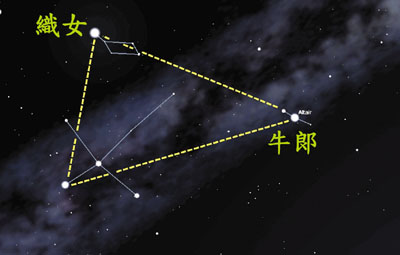
「天階夜色涼如水,坐看牽牛織女星」,七夕雖已過去,不過原來在夏末初秋的傍晚,我們還是可以坐看牽牛織女星以及分隔着他們的天河(銀河)。大家只要抬頭,便可看見天頂有3顆較亮的恒星,形成天文愛好者俗稱的「夏季大三角」,而銀河亦剛巧跨過大三角的天區(見圖),三星當中最亮的一顆星便是織女星,小心觀察,不難發現織女旁有4顆暗星組成一個平行四邊形,恍如織女的梭織機。大三角中比織女略暗的便是牛郎星,也叫牽牛星或河鼓二,在牛郎的兩旁各有一暗星,民間俗稱這組星為「扁擔星」,隱喻牛郎挑着兒女,正在追趕着對岸的織女。近十數年香港光污染非常嚴重,要看得見銀河,非要跑到黑漆的郊野不可。大三角中最暗的一顆星叫天津四,它與幾顆略暗的星組成十字架狀的天鵝座。
Love story in the sky
The far eastern countries share a common legend of Niu Lang and Zhi Nu. The "Seventh Evening" Festival (the seventh day of the seventh month of the lunar calendar) is specially dedicated to Zhi Nu. The Festival falls in mid summer when the Heavenly River (the Milky Way) is most prominent. At around nine in the evening, if you look directly above your head, you will see three very bright stars, commonly known as the "Summer Triangle". The brightest of the three stars is Zhi Nu or Vega. On the other side of the Milky Way sits the second brightest star, Niu Lang or Altair. To witness the splendour of the Milky Way, one has to venture into the country parks where the night sky is least affected by light pollution from the city. ■甄枝強 資深天文愛好者
|


 放大圖片
放大圖片



