 放大圖片 放大圖片
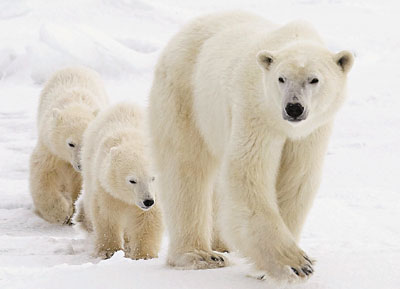
■不少專家表示,若全球氣候暖化加劇,北極熊將會很快絕種。 資料圖片
如果地球溫度上升攝氏4度(約華氏7度),將不再適宜人居住。
聯合國氣候峰會於本月7至18日舉行,各國元首都力圖淡化外界對此的期望,專家警告地球較工業化前升溫4度是大有可能。
海洋將最少升高1米,淹沒部分島國,並迫使孟加拉、泰國、越南和其他臨海地區的上億人口湧向高地。
北極的溫度將飆升15度,相當於地球平均溫度升幅的4倍,北極熊將因飢餓而絕種,只能成為人們的回憶。
今年2月奪走170條人命的澳洲森林大火將定期肆虐。1/3甚至更多的亞馬遜雨林區將成為荒涼的灌木叢區,雨林內稀有的動植物將受嚴重破壞。
亞洲的永恆水源喜馬拉雅山冰川將枯竭殆盡。南亞定時且珍貴的雨季將變幻無常,不是下得太少,就是氾濫成災。
地球的1/4哺乳類動物將跌入絕種的漩渦。
亞利桑那州立大學教授麥克爾威表示:「如果地球溫度上升4度,將對人類安全和生活質素帶來前所未有的威脅。」
「全球碳計劃」的國際科學家小組於11月16日指出,2000到2008年間,全球的碳排放量激增29%,這將令地球走向聯合國政府氣候變化小組預測的最壞暖化情況。
根據他們按現時情況推算,人類若繼續現有生活模式,大量使用煤和其他石化燃料,2100年地球的溫度將較2000年增加4至6.4度。
若再加上工業革命後全球暖化所帶來的0.74度,對全球現時67億人口(2050年將增至90億)來說將是一場災難。
到2080年,30億人會難以覓得充足水源,餵養全球人口的大部分主要糧食將減少,甚至劇減,導致數以千萬至上億計的人長期捱餓。
但好消息是,幾乎所有專家都認為,若溫室氣體排放量能見頂回落,人類現時仍有時間阻止危機爆發。 ■綜合外電消息
■羅國偉 資深翻譯員
Earth Will be Endangered if Temperature Rises 4C More
If Earth heats by 4 degrees Celsius — some 7 degrees Fahrenheit ─ the planet we call home would become a very unwelcoming place.
Even as some world leaders tamp down expectations for the December 7-18 UN climate conference, experts say the threat of a 4C(7.2 F)warming over pre-industrial times is all too plausible.
Oceans have risen by at least a metre(3.25 feet), drowning several island nations and driving hundreds of millions of people in Bangladesh, Thailand and Vietnam and other delta nations to scramble for higher ground.
Polar bears are a folk memory, starved to extinction in an Arctic where temperatures have soared by 15C(27 F), nearly four-fold the global average.
Australia is routinely swept by white-hot fires of the kind that claimed 170 lives last February.
A third─perhaps more─of the Amazon forest has been reduced to desolate shrubland, its treasure chest of flora and fauna decimated.
Asia's eternal fountain, the Himalayan glaciers, are running dry. South Asia's precious monsoon, once reliable as clockwork, has become fickle, dumping too little or too much rain.
A quarter of the planet's mammals are on a downward spiral toward extinction.
"A 4.0C increase in global mean temperatures has the potential to threaten human security and quality of life in a manner unprecedented in recent history," says Arizona State University professor Pamela McElwee.
On November 16, an international team of scientists, the Global Carbon Project, said carbon emissions had surged by 29 percent from 2000 to 2008.
This places Earth on track with the worst-case warming scenario put forward by the UN's Intergovernmental Panel on Climate Change (IPCC), it said.
Under its so-called "business-as-usual" forecast, voracious use of coal and other fossil fuels would see planetary warming of 4.0 to 6.4C(7.2 to 11.5 F)by 2100 compared with 2000.
To that, add another 0.74C of warming that has occurred since the Industrial Revolution.
This would spell disaster for Earth's population, 6.7 billion today, on course for 9 billion in 2050.
In 2080, 3 billion people would struggle to find adequate water. Yields of the major crops that feed most of the planet today would shrink, some dramatically, resulting in chronic hunger for tens, possibly hundreds, of millions.
The good news, virtually all of these experts said, is that there is still time to halt the slide if greenhouse-gas emissions peak soon enough and fall thereafter. ■AFP
|


 放大圖片
放大圖片



